
I Tested 3 Side Hustles for 7 Days, Here’s What Actually Made Money
Most people spend time reading about side hustles. Few test them in real conditions. I chose action over research. I tested three common side hustles for one week. Dog walking, freelancing, and selling a digital product. I tracked time, effort, and income. The goal was simple. Find what works in the real world.
The first two days focused on setup. This stage decides how fast income starts.
For dog walking, I posted in local WhatsApp groups and community boards. I offered morning and evening walks at ₹150 per session. For freelancing, I created profiles on Fiverr and Upwork. I listed services in Excel work, data cleaning, and financial basics. For the digital product, I built a simple Excel budget tracker and listed it on Gumroad.
This phase took around six to eight hours. Income was zero. This is the stage where most people quit. They expect results without setup.
From day three, responses started coming in.
Dog walking gave the fastest results. Two local clients contacted me. One needed daily service. Another needed alternate days. I handled three walks per day. At ₹150 per walk, I earned ₹450 daily. The work took about two hours. The process was direct. Deliver the service and get paid.
Freelancing required more effort. I sent fifteen proposals in two days. Only one client responded. The task was Excel data cleanup. Payment was ₹500. The work took two hours including revisions. The real effort was in writing proposals and waiting for replies.
The digital product started slow. I shared the link on LinkedIn and WhatsApp. Three people purchased it at ₹99 each. Total income reached ₹297. The product existed, but sales depended on visibility.
By day six, I pushed each hustle further.
In dog walking, I asked for referrals. One client referred another. This increased my workload to five walks per day. Daily income reached ₹750. The limitation became clear. Income depends on time and physical effort.
In freelancing, I improved my proposals. I added sample work to show proof. This change increased responses. Two more clients replied. One project got confirmed at ₹1,200. Better presentation improved results.
For the digital product, I improved the product page. I added clear benefits and screenshots. This built trust. Sales increased by five more units. Total earnings reached ₹792. The product remained the same. Only the presentation changed.
After one week, each side hustle showed clear outcomes.
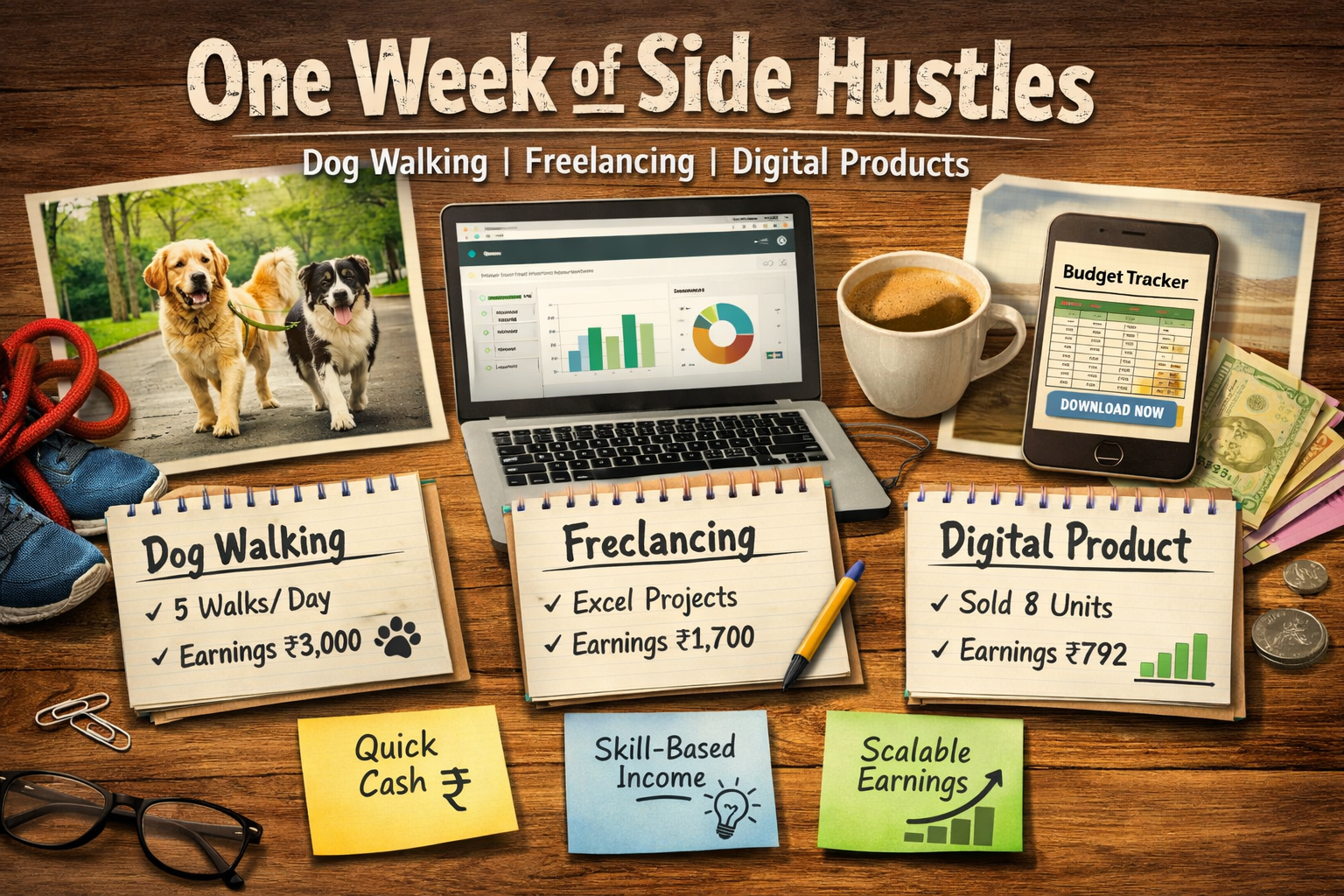
Dog walking generated around ₹3,000 with ten to twelve hours of work. Freelancing brought ₹1,700 with eight to ten hours invested. The digital product earned ₹792 with five to six hours spent.
Each hustle behaved differently. Dog walking provided quick cash. Freelancing offered skill-based income. Digital products showed future scalability.
Dog walking worked fast because it solved a local need. It required no advanced skills. The downside was limited growth. Time restricted income.
Freelancing showed long-term value. It paid more per task. It also built professional skills. The challenge was competition and low initial response rate.
Digital products required the least effort after creation. Income depended on marketing. Without visibility, sales stayed low.
Practical Takeaways
Start with skills you already have. This reduces setup time.
Take action quickly. Do not wait for perfect conditions.
Track your effort and income daily. Numbers guide decisions.
Combine different types of income. Active income gives immediate cash. Scalable income builds over time.
Improve based on feedback. Small changes increase results.
Conclusion
One week of testing gave more clarity than months of planning. Each side hustle served a different purpose. Fast income, skill growth, and scalability all require different approaches.
The main lesson is simple. Start, measure, and adjust. Results come from action, not ideas.